UCD Formula Student · 2026
2026 accumulator container
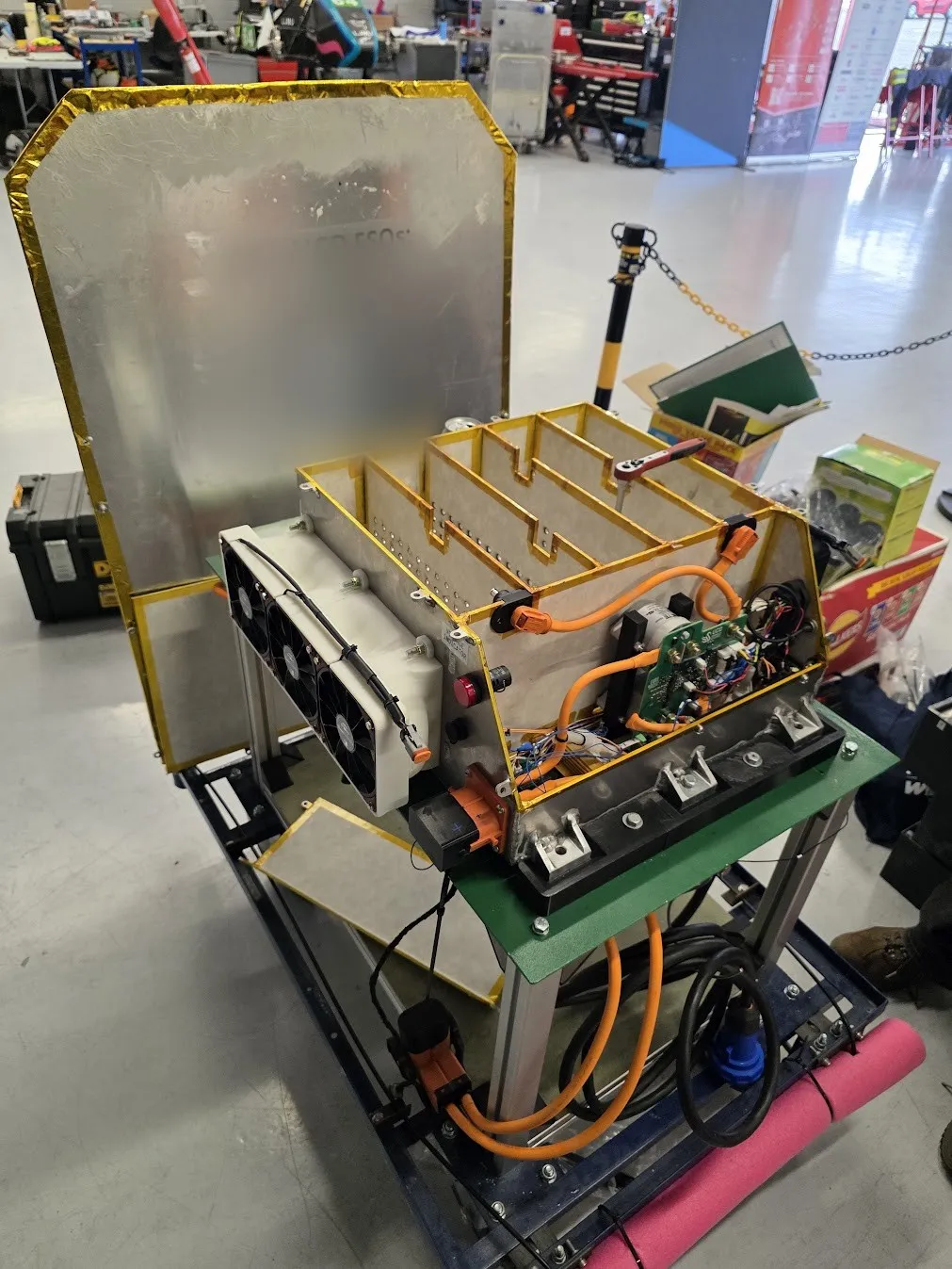
A full redesign of the car's battery container around a new BMS. Moving from steel to aluminium took 8 kg out while still passing the structural sign-off.
- Role
- Mechanical configuration
- Team
- UCD Formula Student
- Tools
- Onshape, Ansys Mechanical
- Progress
- Complete
- 01 Result
- −8 kglighter than the 2025 steel container
- 02 Result
- 1.95minimum safety factor in FEA
- 03 Result
- SESstructural sign-off passed
The brief
The 2026 car was getting a new battery management system, and with it a new battery. The old accumulator container was steel. It was strong, but heavy, and it had been designed around different cells and electronics.
The tractive system accumulator container (TSAC) is one of the most scrutinised parts of an electric Formula Student car. It has to hold the cells in place through the rule-book crash load cases, and the team has to prove that in the Structural Equivalency Spreadsheet (SES) before the car is allowed to run.
What I did
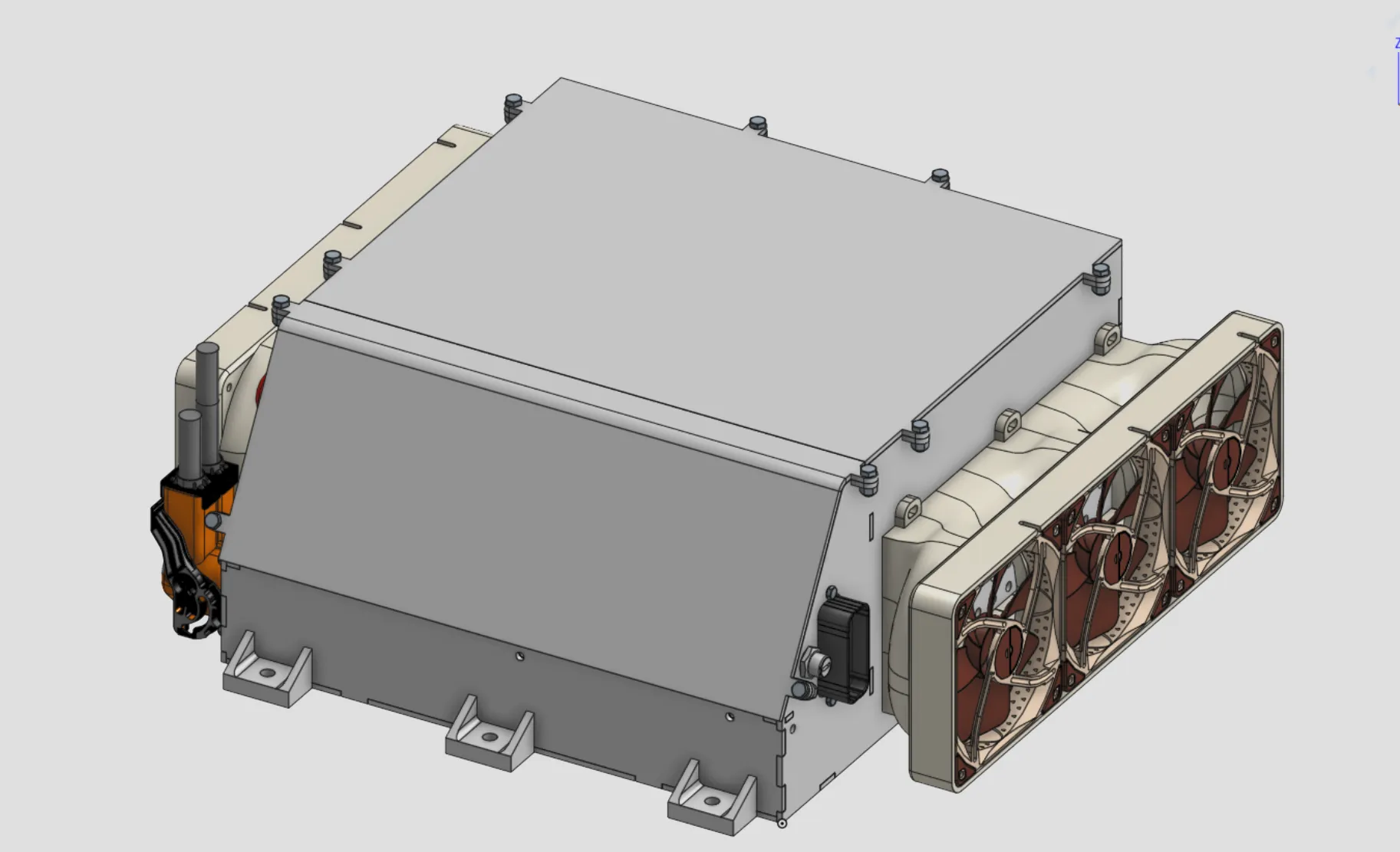
I worked alongside the electrical team on the complete redesign. They looked after the cells, BMS and wiring. My part was the mechanical configuration: the container’s walls, internal dividers, lid and mounts, and packaging the cooling fans and connectors.
I modelled the container in Onshape and worked through the layout with the electrical team so the cells, BMS, fans and connectors all fit inside the envelope. Switching from steel to aluminium was the biggest single saving, but it meant every wall and divider had to earn its thickness.
Proving it
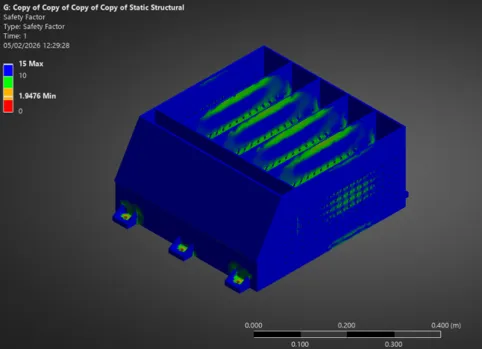
I ran static structural analyses in Ansys against the SES load cases and used the results to decide where material could come out and where it had to stay. The final design has a minimum safety factor of 1.95.
Result
The new TSAC is 8 kg lighter than the steel container it replaced, and it passed SES. It was built and went to competition on the 2026 car.